Learn

What is e-waste, and why does it matter?

E-waste is any electrical or electronic equipment that is no longer wanted or working — from a cracked phone to a television that will not switch on.

Learn

What is e-waste, and why does it matter?

E-waste is any electrical or electronic equipment that is no longer wanted or working — from a cracked phone to a television that will not switch on.

What counts as e-waste?

Anything with a plug, battery or cable. Large appliances, computers, phones, screens, printers, power tools, lighting, toys and the accessories that come with them.

  • Phones & tablets
  • Computers
  • Screens & TVs
  • Cables & chargers
  • Batteries
  • Small appliances

Why it is different from other waste

Electronics mix valuable metals with hazardous materials in the same object. That makes them worth recovering — and risky to bury, burn or leave in the open.

  • Copper
  • Aluminium
  • Gold & silver
  • Plastics
  • Lead
  • Mercury

The value we throw away

A discarded device is a store of materials that took energy and mining to produce. Recovering them reduces the demand for new raw material and keeps value in the local economy.

  • Critical minerals
  • Rare earth elements
  • Reusable components
  • Repairable parts

What is in the global picture

The world generated 62 billion kg of e-waste in 2022 and documented just 22.3% as formally collected and recycled. Global e-waste is rising about five times faster than documented recycling.

  • 62 billion kg in 2022
  • 22.3% documented
  • Africa below 1%
  • Uganda below 1%
Before you hand anything over

Handling your device safely

A little preparation protects your personal data and makes the handover safer for everyone involved.

  1. Back up anything you still need and sign out of your accounts.
  2. Remove SIM and memory cards, then erase your personal data if you can.
  3. Keep batteries out of household rubbish and away from heat or damage.
  4. Ask before handing over: confirm what a collection point accepts.
Figures from ITU / UNITAR, Global E-waste Monitor 2024
Why it matters here

What the numbers look like on the ground.

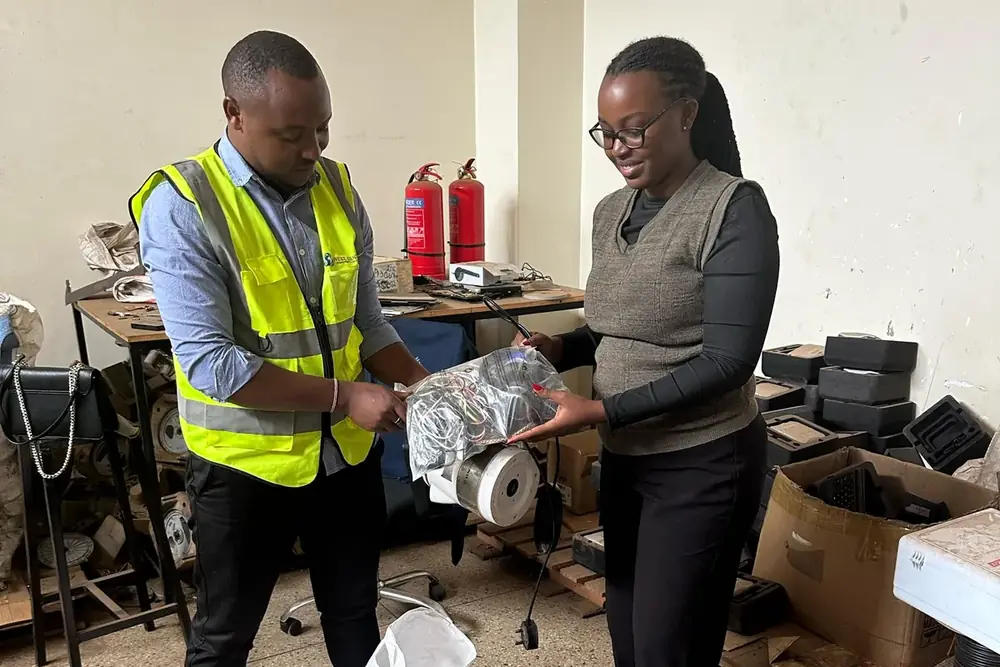
Two Zura Tech team members sorting collected electronics and cables for reuse and recycling
Sorting collected electronics before reuse and recycling.
  1. Most of it is never collected

    Less than 1% of Uganda's e-waste is formally collected and recycled, and Africa's documented formal collection rate is below 1%. The rest stays in homes, informal dumps or mixed rubbish.

  2. It is stored, not discarded

    In Kampala, many households keep unused phones, televisions and computers for years. Residents regularly ask where to take broken electronics — there is often nowhere nearby to go.

  3. Stored devices still carry risk

    Toxic substances such as lead and mercury can contaminate soil and water when electronics break down or are burned, while valuable recyclable materials are lost.

After you hand it over

What happens to your device.

The most common worry about e-waste is that it gets dumped anyway. Here is the route an item takes once it leaves your hands.

  1. Handed over

    Collected from your home or workplace, dropped at a collection point, or brought to a collection drive.

  2. Sorted and checked

    Items are sorted by hand before anything is written off, so usable equipment is not treated as scrap.

  3. Reuse and repair

    Equipment that still works, or can be repaired, stays in use rather than being broken down.

  4. Material recovery

    What cannot be reused goes to our recycling partners, including Weee Centre Uganda, so metals and components are recovered.

  5. Counted and recorded

    Each handover is weighed and counted. Those totals are what you see on our impact page.

Want to know the route for a specific item? Ask us before you hand it over.

Ask us on WhatsApp
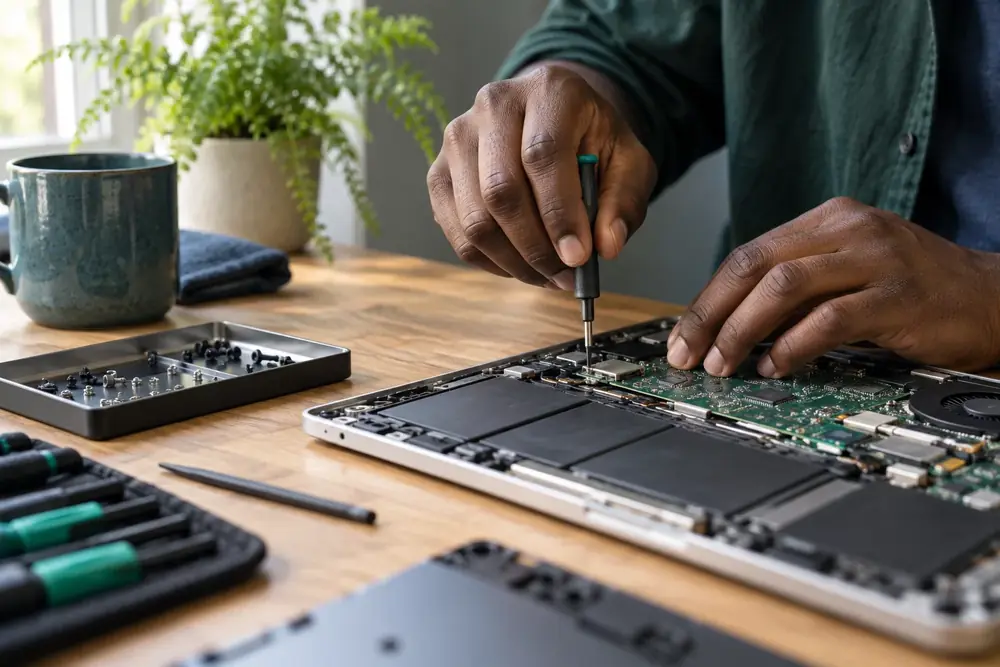
Illustrative image of a technician’s hands working on a laptop
Worth a second look.A small repair can open up a whole new chapter.
BEFORE YOU PASS IT ON

A little care.
A better handover.

For a device that is safe to use, work through these steps before it changes hands.

0 of 4 steps checked
Need guidance for your device?

Old tech.
New possibilities.

Before you clear that drawer, find out what could come next for your electronics.

A little preparation makes a difference.
Protect your data before passing a device on.

1 What do you have?

A guide to your options. Handover arrangements must be confirmed separately.

A few useful answers

Not sure where to begin? Start here.

What is e-waste?

E-waste is electrical or electronic equipment that is no longer wanted or working. Phones, computers, chargers and other devices can contain useful materials, so keeping them out of everyday rubbish matters.

Does my old device have to be working?

A working device may be suitable for reuse. A broken device may still be repairable or need specialist recycling. Use our device guide to explore your next step, then confirm any handover arrangements with us or the recipient.

How should I prepare a phone or computer?

If it is safe to use, back up what you need, sign out of your accounts, remove SIM and memory cards, and follow the manufacturer's instructions to erase your data. If you cannot erase a device, ask about secure data removal before handing it over.

How do I book an awareness session?

Get in touch and tell us the group, an approximate number of people and a preferred date. We run sessions for schools, workplaces, churches and community groups, and we can tailor the content to your audience.

How can I arrange a collection?

Contact us with the kind of items you have, roughly how many, and where they are. We will confirm what can be accepted and agree a time before anything is collected.

Can my organisation get involved?

Yes. You can host a session, become a drop-off point, clear out retired equipment, or partner with us on the rewards programme. Tell us what you would like to contribute and we will discuss the next steps.

The future isn’t disposable.
Let’s give it another life.

A greener future starts with the choices we make today.

Start with your old tech
  • Repair
  • Pass it on
  • Donate
  • Recycle
Message us